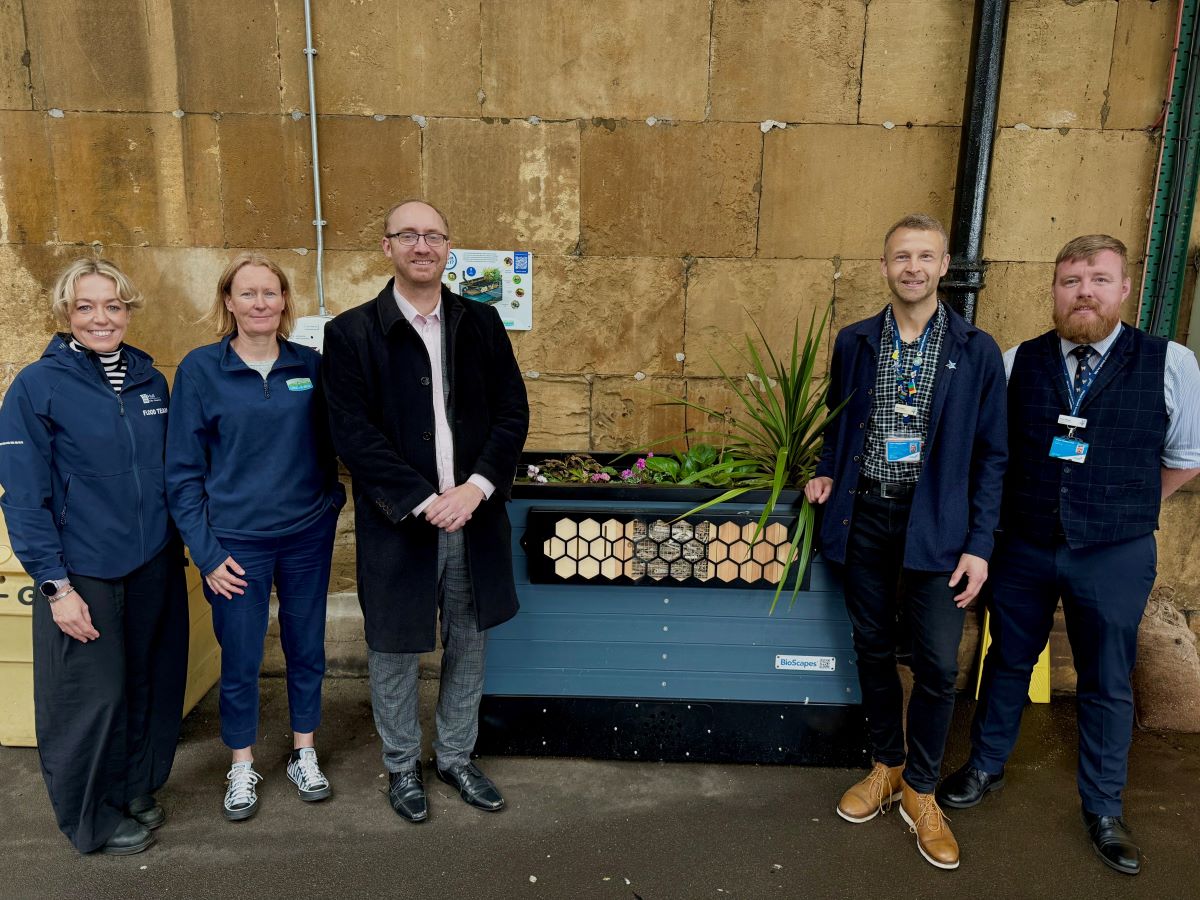
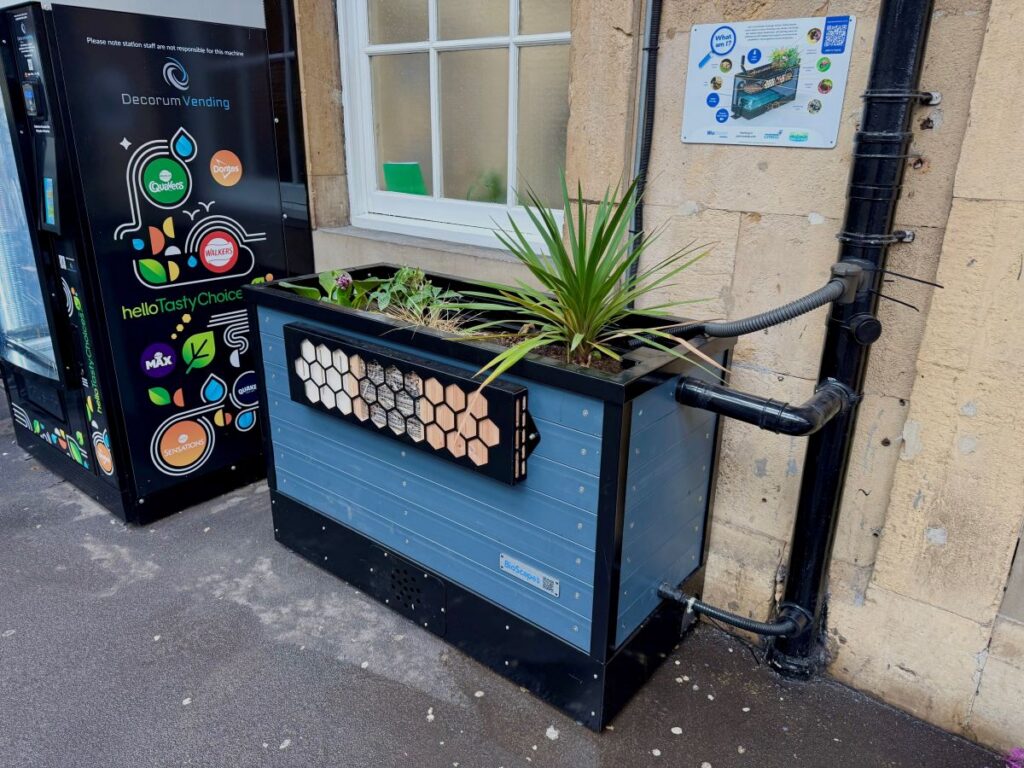
Three sustainable drainage (SuDS) planters have been installed at Hull Paragon Interchange to help to make the station more resilient to climate change and minimise disruption to rail users, delivered with TransPennine Express and the Living with Water partnership.
The specially designed planters have been placed in specific areas to capture water from the station roof and to provide water storage in times of heavy rain.
Water will then be slowly released into drains to help to reduce possible flooding by creating additional capacity in the network.
The planters will also bring air quality, ecology and amenity benefits, as the units will feature certain plants suitable for the locations which will provide food and habitat for insects.
This in turn will help to feed birds, benefitting the wider ecosystem in what is an urban environment.
The project is part of a wider partnership which Hull City Council and Living With Water have with TransPennine Express which will continue to explore further environmental improvements to the station and surrounding area.
Cllr Charles Quinn, portfolio holder for environment at the council, said: “The council is pleased to have partnered with Living With Water and TransPennie Express to install these planters.
“They will provide both ecological and aesthetic benefits to the station, whilst also minimising disruption to rail users, demonstrating the council’s commitment to tackling climate change.”
Emma Brown, general manager of Living with Water, said: “The addition of three SuDs at Paragon Interchange is a great example of how nature-based solutions can support flood resilience in urban centres.
“Our long-term strategy is to build flood resilience across the city, working with our partners, to create greener, more biodiverse spaces that build a strong foundation for future phases of flood management.”