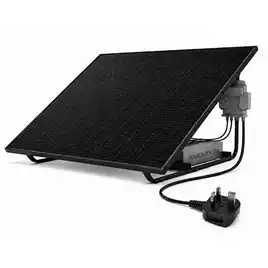
From 27 August, plug-in solar panels became legal to buy and use across Great Britain. These low-cost systems allow households to generate some of their own electricity and could save up to £110 a year on energy bills.
While the new law makes plug-in solar panels more accessible, tenants must be aware that permission may still be required before any equipment is installed at a council property.
What Does This Mean for Council Tenants?
High-rise properties
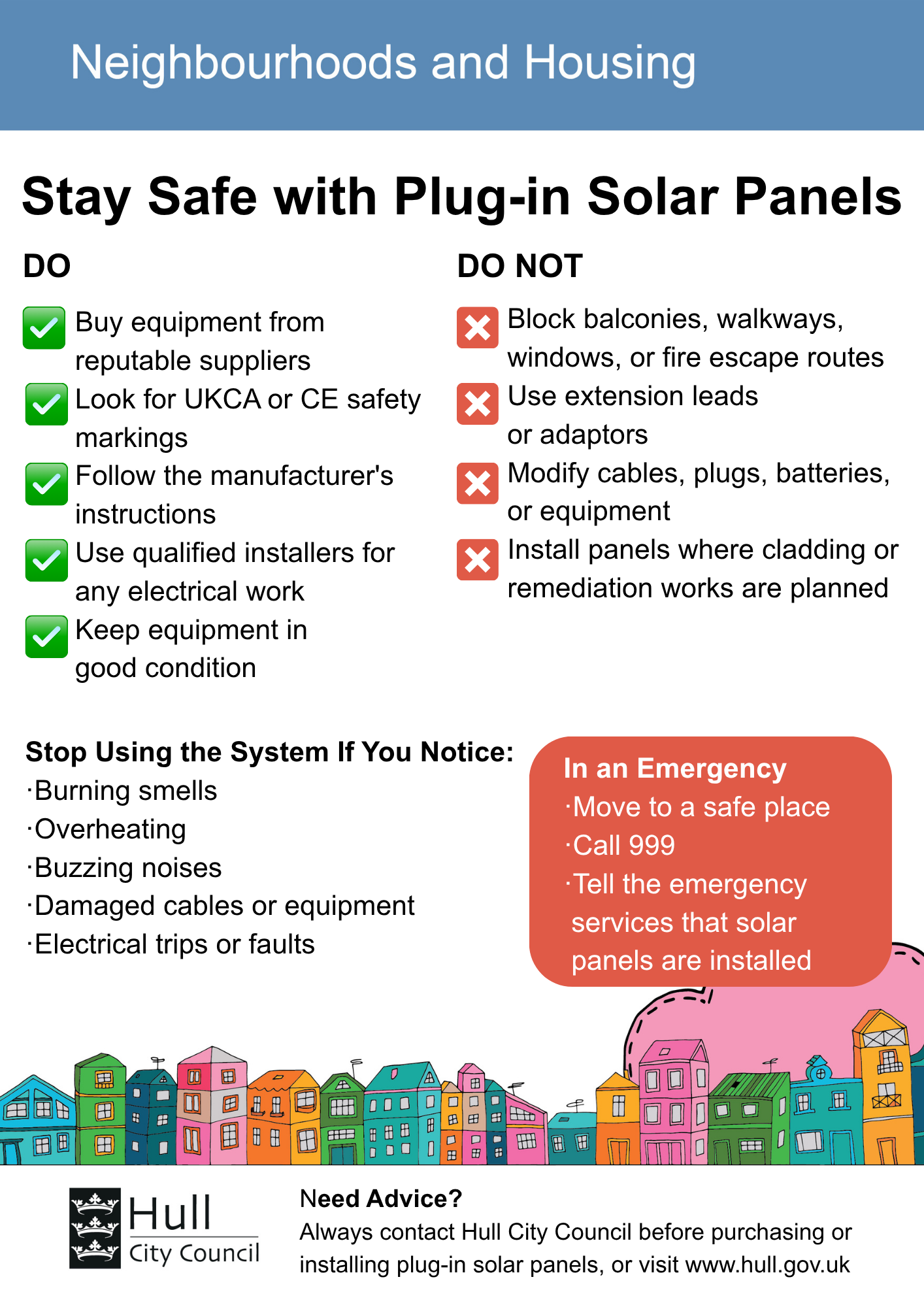
Plug-in solar panels are not permitted in high-rise buildings due to potential risks to existing electrical systems and building safety requirements.
Flats
Tenants living in flats must obtain written permission before installing or using plug-in solar panels. Permission will not be granted for installations in communal areas, including shared balconies, walkways or escape routes. Requests will be assessed to ensure the building’s electrical system can safely support the equipment and any associated alterations.
Houses and Other Property Types
Permission is only required where alterations or additions to the property are needed, such as:
- Installing an external socket
- Drilling through walls for cabling
- Fixing panels to the building, fences or balconies
Before purchasing any equipment, residents are strongly advised to consult a qualified electrician to confirm the system is suitable and compatible with their home’s electrical installation.
Contact Us First
If you are considering installing plug-in solar panels, please contact the Council before making any purchase or carrying out any works. Seeking advice early can help avoid unnecessary costs, tenancy breaches and potential safety issues.
For more information, visit the Hull City Council website here Plug-in solar panels | PV panels | Hull