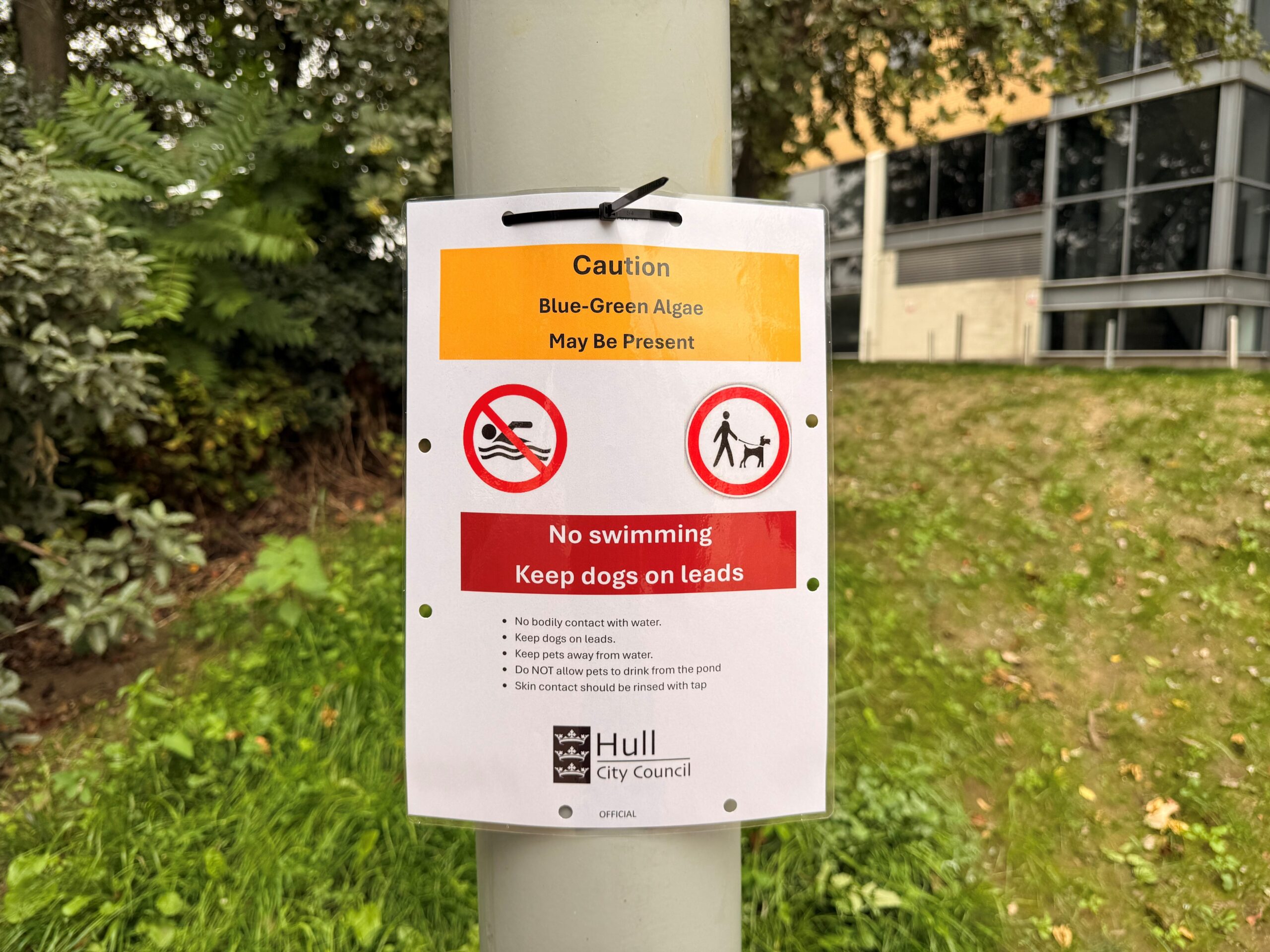
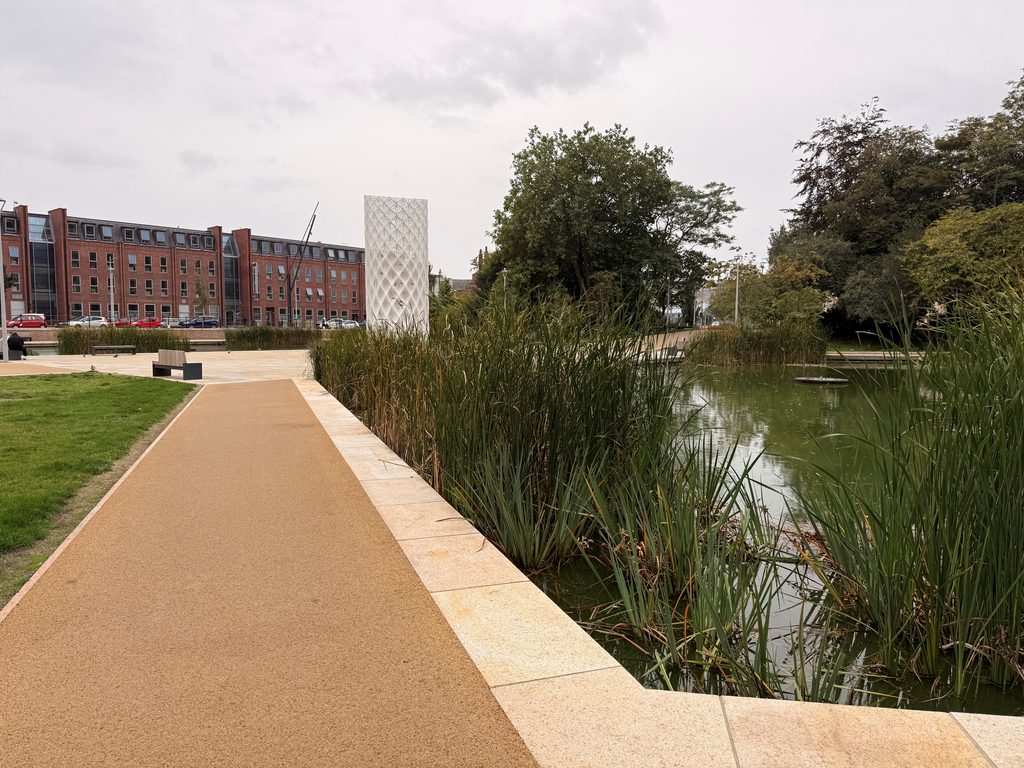
Hull City Council has taken swift action following concerns that blue-green algae may be present in two of the ponds in Queens Gardens.
The council has arranged for specialist testing of the water in the ponds on the western side of the gardens, to confirm the presence of blue-green algae, after concerns were raised.
In the meantime, and in the interest of public and environmental safety, clear signage has been installed today (Friday 18 September) around the ponds to strongly advise visitors to avoid contact with the water.
The fountains in the ponds have also been temporarily switched off to minimise the risk of water spray.
While the fountains are switched off, the council will continue to carefully manage oxygen levels in the water to help protect the fish and maintain the health of the ponds.
This naturally occurring algae, is triggered during hot spells of weather and is caused by the bacteria Cyanobacteria, which can pose risks to both people and animals when present in high concentrations.
Visitors are urged to keep dogs on a lead and away from the ponds, and to ensure pets do not drink from the water.
The algae will naturally disperse once cooler temperatures return along with increased precipitation.
Councillor Charles Quinn portfolio holder for environment at Hull City Council, said: “Ensuring everyone’s safety and wellbeing is our top priority, which is why we have acted quickly following concerns about possible blue-green algae in the ponds.
“While we await the results of specialist testing, we have introduced precautionary measures, including installing warning signage and temporarily switching off the fountains to minimise any potential risk.
“We would ask everyone visiting Queens Gardens to follow the advice on the signage, avoid contact with the water, and keep dogs on leads and away from the ponds.”
The eastern pond, and the Rose Bowl, in Queens Gardens will be monitored. The fountains in these ponds will remain switched on to keep the water moving, helping to reduce the chance of blue-green algae occurring.